
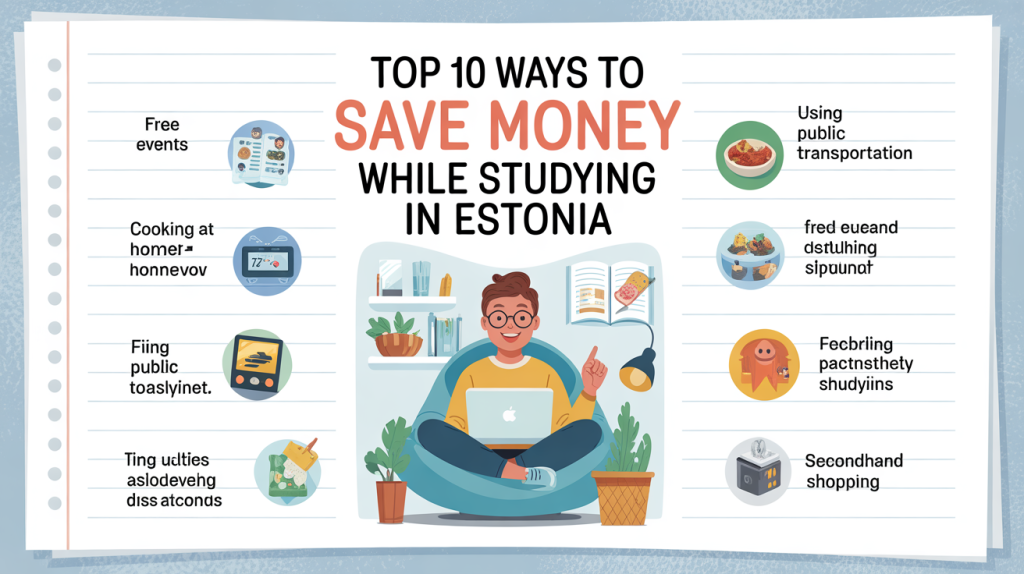
Top 10 Ways to Save Money While Studying in Estonia
1. Take Advantage of Student Discounts
2. Invest in Quality Winter Clothing
3. Shop Smart: Use Loyalty Cards and Affordable Stores
4. Buy Second-Hand or Reuse Items
5. Batch Your Purchases
6. Monitor Utility and Housing Contracts
7. Use Public Transport or Bike
8. Cook at Home and Limit Eating Out
9. Open a Savings Account
10. Distinguish Wants from Needs
Conclusion
Take the Next Step with Study in Estonia
Why Financial Savvy Matters for International Students in Estonia
Studying abroad comes with a unique set of financial challenges, including accommodation costs, daily expenses, and occasional emergencies. By implementing smart budgeting strategies, students can extend their resources and reduce unnecessary expenditures. This post also highlights how universities and recruitment agencies can support students through proactive guidance on financial management, enhancing their overall experience in Estonia.
1. Take Advantage of Student Discounts
One of the first steps to saving money in Estonia is making full use of available student discounts. Many shops, restaurants, cultural venues, and public transport services offer reduced prices for students.
- Always carry your student ID to access discounts.
- Check museums and exhibitions for special student rates.
- Use discounted tickets on buses, trams, and trains to lower commuting expenses.
These small savings quickly add up and improve students’ financial stability while promoting social and cultural participation.
2. Invest in Quality Winter Clothing
Estonian winters are famously cold and demanding. Instead of purchasing inexpensive and low-quality clothing annually, investing in durable winter gear can save money over time.
- Buy warm coats, boots, gloves, and thermal wear from reputable stores.
- Opt for items that last several years to avoid recurrent spending.
- Quality clothing enhances comfort and prevents health issues linked to cold exposure.
3. Shop Smart: Use Loyalty Cards and Affordable Stores
Maximizing savings on everyday purchases involves smart shopping tactics.
- Collect loyalty or customer cards from popular supermarkets to benefit from discounts and cashback offers.
- Choose budget-friendly grocery stores and monitor weekly specials.
- Plan purchases to coincide with sales or promotional periods.
4. Buy Second-Hand or Reuse Items
Sustainability meets savings by opting for second-hand goods.
- Explore local thrift shops, charity stores, or online communities like Facebook groups for affordable clothing, furniture, and electronics.
- Reuse or recycle household items whenever possible.
5. Batch Your Purchases
Planning shopping activities strategically can reduce the cost per item and avoid last-minute, higher-priced buys.
- Buy non-perishable products in bulk during sales or discounts.
- Create shopping lists to avoid impulse purchases.
- Store staple items to minimize frequent trips that increase transport and incidental costs.
6. Monitor Utility and Housing Contracts
Understanding and managing housing-related expenses is crucial.
- Clarify responsibility for utility payments (electricity, heating, water) at the time of rental to avoid surprises.
- Track consumption, especially energy use, because prices may vary throughout the day.
- Discuss contract details thoroughly with landlords or housing services to confirm inclusions and fees.
7. Use Public Transport or Bike
Transportation is a significant expense, but Estonia offers affordable options.
- Utilize public transportation, which is generally efficient and offers student discounts.
- Consider biking as a low-cost, healthy, and eco-friendly alternative.
- Some cities have bike-sharing systems accessible to students at reduced rates.
8. Cook at Home and Limit Eating Out
Dining choices substantially impact monthly budgets.
- Prepare meals at home rather than frequently eating out.
- Plan meals around affordable, nutritious ingredients.
- Reserve restaurant visits for special occasions.
9. Open a Savings Account
Building a habit of saving money safeguards against unexpected expenses.
- Open a dedicated savings account for emergency funds or future needs.
- Deposit small, consistent amounts monthly.
- Track your savings progress to maintain motivation.
10. Distinguish Wants from Needs
A crucial financial skill is discerning essential purchases from discretionary ones.
- Before making any purchase, evaluate its necessity.
- Delay or avoid impulse buys.
- Create a priority list to keep spending aligned with real needs.
Supporting International Students Through Financial Awareness
At Study in Estonia, we recognize the vital role of financial literacy and resource optimization in international student success. Our comprehensive platform offers services that:
- Connect prospective students with universities that provide transparent information about costs and student support.
- Facilitate admissions with clear guidance on budgeting and scholarships.
- Equip recruiters and institutions with tools to promote student well-being holistically.
Conclusion
Studying in Estonia offers tremendous opportunities for international students, but managing finances smartly is fundamental to making the most of this experience. The top 10 ways to save money while studying in Estonia outlined here provide practical, research-backed strategies that students can implement immediately, and education professionals can incorporate into their advisory services.
By encouraging and facilitating these habits, universities, recruitment teams, and educational agencies play a pivotal role in student success. Study in Estonia remains committed to supporting this ecosystem with leadership in education and international recruitment.
Take the Next Step with Study in Estonia
Ready to enhance your student recruitment strategy or support international students with comprehensive financial guidance?