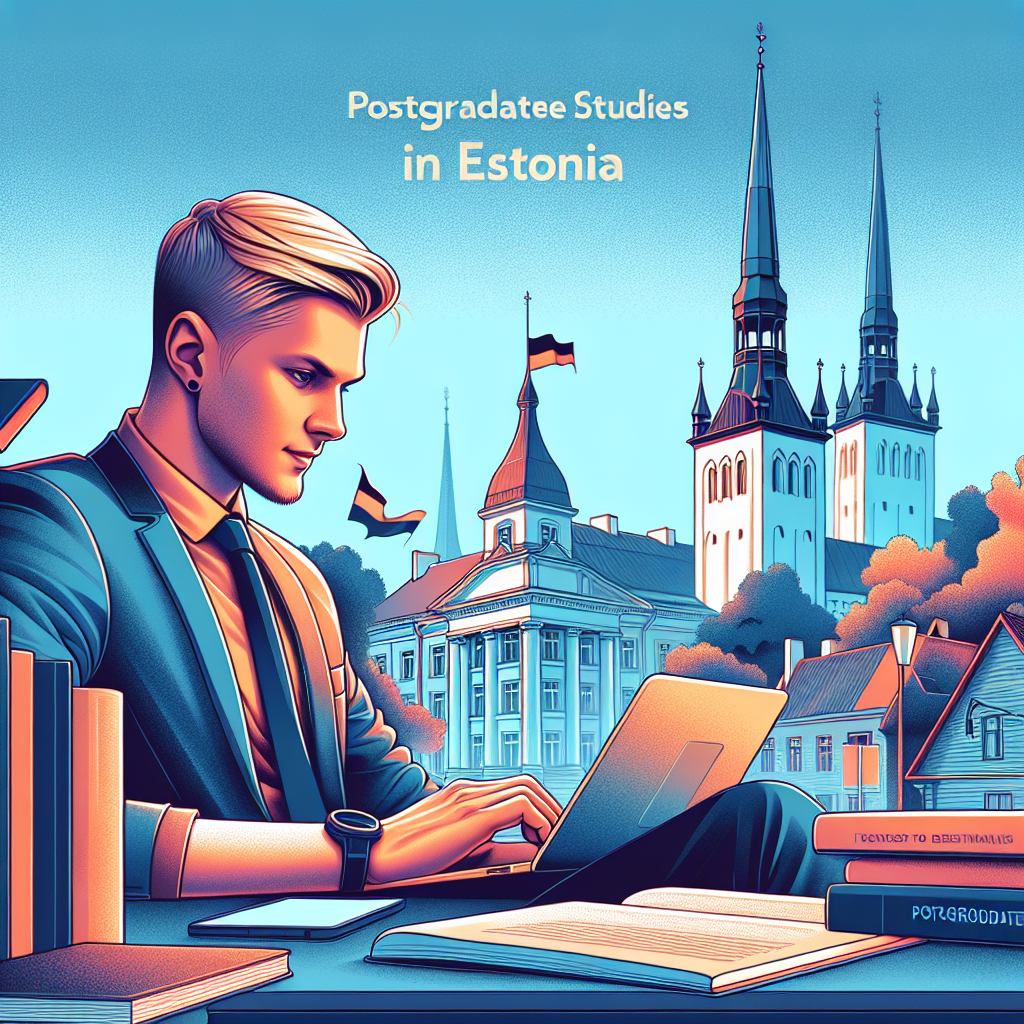
How to Apply for Postgraduate Studies in Estonia
1. Select Your Program
In recent years, Estonia has emerged as a prime destination for international students seeking high-quality education in Europe. The first step in your application process is selecting a suitable postgraduate program. Estonia offers a variety of postgraduate options across its universities. Here’s how to make an informed decision:
- Explore Options: Use online admissions platforms like DreamApply or consult specific university websites to explore available programs.
- Align with Goals: Ensure that the program aligns with your academic background and future career aspirations.
- Check Specific Requirements: Different programs have unique prerequisites, such as a portfolio for art-focused degrees or interviews for certain academic fields.
For a detailed overview of programs available in Estonia, you can browse through the Study in Estonia website.
2. Review Admission Requirements
Once you have your program in mind, it is vital to review the admission requirements specific to your chosen course. Generally, for postgraduate studies (Master’s or Ph.D.), the following documents are required:
- A Bachelor’s degree or an equivalent qualification.
- Transcripts from your previous academic institutions.
- Proof of English proficiency (e.g., IELTS, TOEFL).
- A professional CV or an academic resume.
- A motivation letter and letters of recommendation.
- Program-specific documents, such as essays or research proposals for doctoral candidates.
For Ph.D. applicants, it is essential to secure a supervisor before applying, as this is often a requirement of the application process.
3. Prepare Required Documents
Preparing the necessary documents is a crucial step in your application journey. Make sure to:
- Gather Documents: Collect all required documentation, ensuring any non-English documents are translated into English by an official translator.
- Check University Specifics: Verify any additional country-specific requirements outlined on the respective university’s website.
Typical documents required include:
- A copy of your passport.
- Bachelor’s degree certificate and transcripts.
- Proof of English proficiency.
- Any additional documents specified by your chosen program.
For specific admission document requirements, you can refer to how to apply.
4. Application Submission
The next step is to submit your application through Estonia’s centralized admissions platform. Here’s how to navigate this process:
- Apply Online: Use DreamApply to submit your application online.
- Pay Application Fee: Be prepared to pay an application fee that typically ranges from €0 to €120.
- Submit Hard Copies: After submitting your online application, ensure that you send hard copies of your required documents to your chosen university according to their instructions.
Check the admission guidelines for more detailed submissions according to individual universities.
5. Admission Process and Deadlines
Post-submission, it’s essential to remain aware of the admission timeline:
- Opening and Closing Dates: Most universities in Estonia open admissions in January, with deadlines varying from March to June.
- Entrance Exams and Interviews: Depending on the program, universities may require additional assessments.
Key Application Deadlines for 2025:
- University of Tartu (Master’s): March 15 for non-EU/EEA citizens.
- Tallinn University: Specific deadlines range from mid-February to March.
For a comprehensive overview of application timelines, visit the Study in Estonia website.
6. Visa and Residency
Once you receive your admission letter, you need to prepare for student mobility by applying for the appropriate visa and residence permit:
- Long-Stay Visa: Non-EU/EEA citizens may need to apply for a long-stay (D) visa.
- Temporary Residence Permit: Necessary if your studies exceed one year.
For more information regarding visa requirements, refer to the Study in Estonia’s admission page.
7. Next Steps After Admission
Once you have successfully navigated the admission and visa processes, consider the following steps to settle into your new academic environment:
- Accommodation: Most universities provide resources or assistance in securing housing.
- Travel Planning: Confirm your travel plans and ensure that all visa or residence permit arrangements are in order.
- Embrace the Experience: After arriving, immerse yourself in Estonia’s vibrant academic culture.
Following these steps will ensure a seamless transition into your chosen postgraduate program in Estonia.
Conclusion
Estonia stands out as an excellent location for international students aiming for postgraduate studies with its high-quality education offerings. By following this comprehensive guide on how to apply for postgraduate studies in Estonia, you are well on your way to unlocking your educational potential in this innovative country.
For further assistance in the application process or inquiries about programs offered, feel free to reach out to our team at Study in Estonia. We are here to help you succeed in your academic journey.
Take the Next Step with Study in Estonia
Ready to embark on your postgraduate journey? Explore more resources and connect with us to get the support you need.